Scarification and moss removal in Teesside
Scarification pulls dead moss and thatch out of the base of the lawn with powered blades, and on Teesside it prices at £1.20 to £2.50 per square metre with the debris taken away. It is the single biggest visual change most local lawns get, and autumn is the right time to book it.
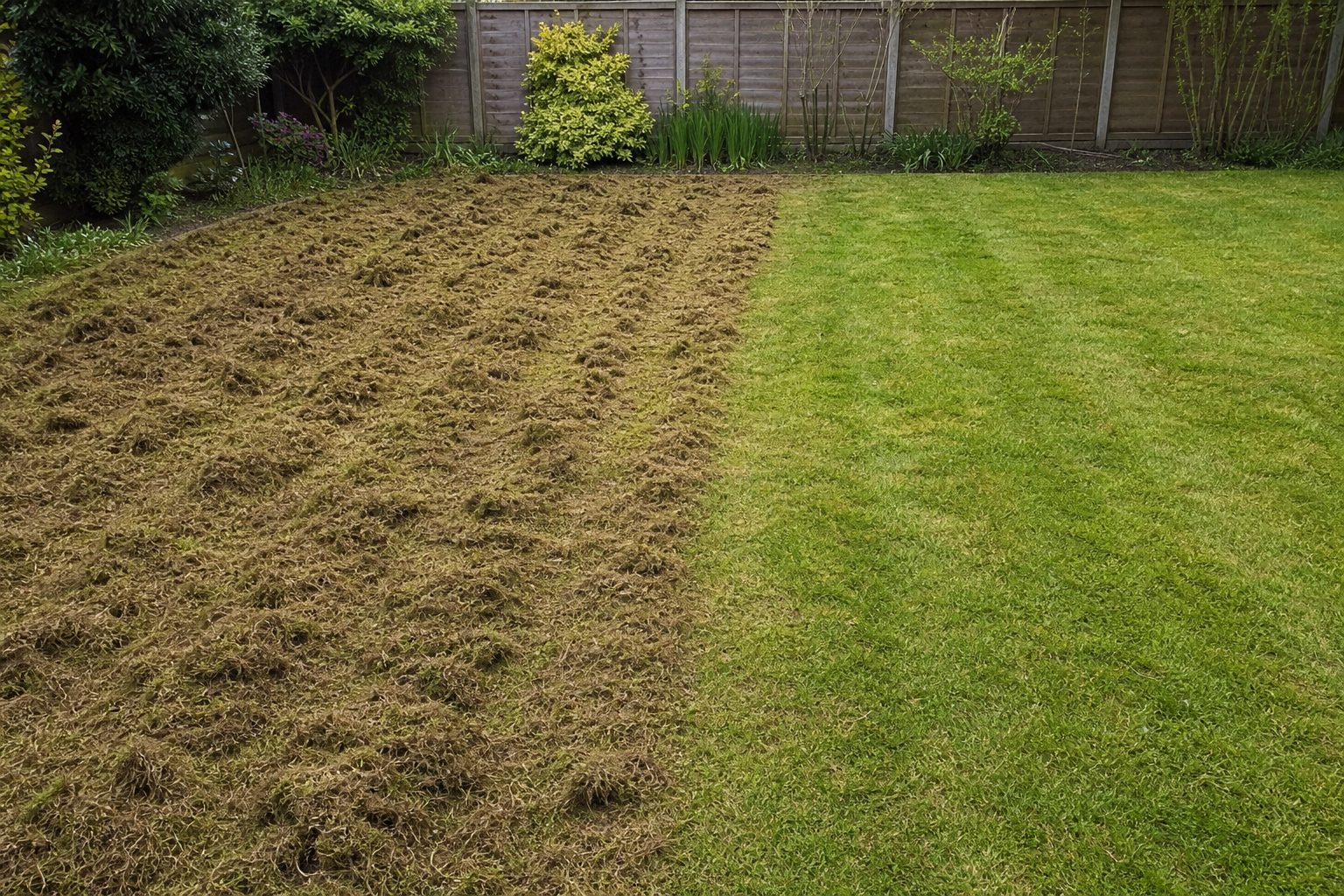
Thatch, moss and why raking matters
Thatch is the fibrous layer of dead stems, roots and clippings that builds between the green leaf and the soil. A few millimetres is healthy and cushions wear. Beyond about 10mm it acts like a sponge sitting on the surface: water and fertiliser stop reaching the root zone, the grass roots into the thatch instead of the soil, and moss finds a permanently damp bed to spread into. Wet Teesside autumns accelerate all of it.
Scarification uses a machine with vertical blades set to cut down through that layer and drag it out. It is deliberately aggressive. A properly scarified lawn looks catastrophic on the day, brown and thin with soil showing between the rows, which is exactly the point: the debris is out and there is a seedbed underneath.
The order of operations
- Kill the moss first. Scarifying live moss spreads viable fragments across the lawn. An iron-based treatment 10 to 14 days beforehand blackens it so it comes out dead.
- Cut low, but not scalped. A shorter cut before the machine goes on lets the blades reach the thatch.
- Scarify, usually in two passes. The second pass at an angle to the first lifts what the first missed.
- Collect and remove. An average Teesside back garden can produce six to ten builders' bags of moss and thatch. Where that goes matters, and a quote should say.
- Aerate and overseed straight after. Bare, open soil is the best seedbed you will get all year, so overseeding and aeration belong in the same visit.
Prices across Teesside
Expect £1.20 to £2.50 per square metre. Two things move the figure: how much material comes out, and access. A 150m² lawn in average condition sits around £180 to £300. A heavily mossy lawn produces far more waste and takes longer to collect, so it prices at the top of the band. Rear gardens reached only through the house or by a narrow ginnel, common in the terraced streets of Middlesbrough, Thornaby and Hartlepool, add labour because every bag is carried out by hand.
When to scarify, and when not to
September into early October is the prime window on Teesside: warm soil, dependable rain and enough season left for new seed to establish. Late March into April is the second window, best on lawns that are already reasonably strong. Avoid high summer, when a stressed, thinned lawn will not recover, and avoid winter, when nothing regrows and the surface is left open to weeds and mud. Frozen or waterlogged ground rules the machine out entirely, which on clay-heavy estates can push a booking back a fortnight.
How often is enough
Most Teesside lawns benefit from scarification every one to two years, and shaded, north-facing gardens on clay often need it annually. A well-drained, well-fed lawn in full sun might go three years. If a contractor recommends annual scarification on a lawn with barely any thatch, ask what depth of thatch they measured and how.
Recovery, honestly
Expect the lawn to look poor for two to three weeks, then noticeably better than before by week five if seed went down and the weather cooperated. Keep it watered if September turns dry, keep the first cut high, and do not panic at the state of it on day two. The full picture is in the Teesside scarification timing guide.