Seasonal lawn treatment programmes in Teesside
A Teesside lawn treatment programme runs to four or five visits a year at £25 to £45 each, or £120 to £220 for the season on an average garden. Each visit combines a feed matched to the time of year with selective weed control or moss control, so the grass thickens and crowds out what you do not want.
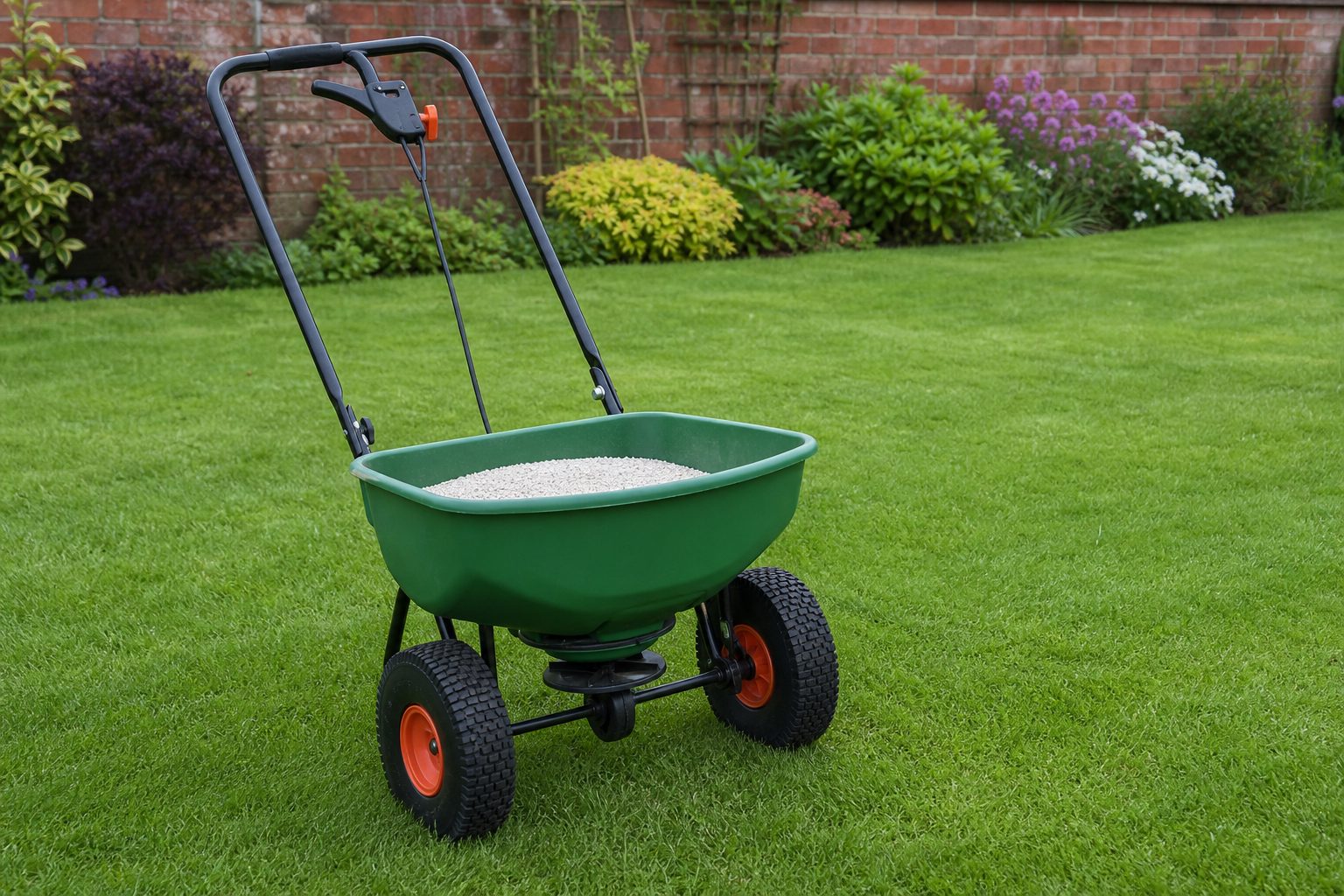
What a treatment programme actually does
Feeding a lawn is not about making it greener for a fortnight. It is about growing a dense sward with a deep root system, because dense turf leaves no bare soil for weed seed to land on and no thin patches for moss to colonise. Most lawn problems on Teesside are not weed problems or moss problems at all, they are density problems with a symptom attached.
A programme works because the timing and the analysis change through the year. Spring feed is nitrogen-led to drive leaf growth after winter. Summer feed is slow release so growth is steady rather than lush and disease-prone. Autumn feed drops the nitrogen and lifts the potassium and phosphate, hardening the plant for winter and pushing energy into roots instead of blades. Applying the wrong bag at the wrong time is the most common self-inflicted lawn injury in the region.
The standard Teesside year
| Visit | Window | Usually includes |
|---|---|---|
| 1 | March to April | Spring feed, iron-based moss control, first selective weed pass |
| 2 | May to June | Slow-release feed, broadleaf weed control, wetting agent if dry |
| 3 | July to August | Summer feed, spot weed treatment, growth check and advice |
| 4 | September to October | Autumn feed, moss control, pest check for leatherjackets |
| 5 (optional) | November to December | Winter hardener on lawns that stay in growth |
What it costs
Pricing follows measured area. A small courtyard lawn behind a Stockton terrace might be 40m² and price at the visit minimum of around £25. A typical semi's back garden of 100 to 200m² sits at £30 to £45 a visit. Larger plots around Yarm, Wynyard and the villages price per square metre once past roughly 300m². Paying for the year up front normally attracts a modest discount, and a fair contract lets you cancel with notice rather than locking you in for three seasons.
Where treatments stop working
Fertiliser cannot fix compaction, cannot drain clay, and cannot outgrow deep shade. If a lawn has more than about 20% moss cover, a thick thatch layer, or standing water after rain, treatments alone are money poorly spent. The honest sequence is scarification and aeration first, overseeding to rebuild density, then a programme to hold the gains. A quote that promises a transformation through feeding alone on a lawn like that is worth questioning.
Mowing, the free half of the job
The single most valuable thing a Teesside homeowner controls is cutting height. Scalping to 15mm in April is why so many local lawns are yellow by mid May and mossy by October. Aim for 25 to 40mm through the season, take no more than a third of the leaf off at any cut, and cut more often rather than lower. On the coastal fringe around Redcar and Marske, leaving clippings on during a dry spell also returns moisture and nitrogen instead of exporting both to the green bin.
Products, safety and the paperwork
Professional lawn products are approved for amenity use and applied by someone holding the relevant certification, with records kept of what went on which lawn and when. Ask for the product names, the exclusion period before children and pets go back on the grass, and confirmation of public liability cover. Any contractor working to a professional standard will have those to hand without hesitation.