Hollow-tine lawn aeration in Teesside
Aeration punches cores out of compacted turf so air, water and feed reach the roots again, and on Teesside it prices at 80p to £1.80 per square metre. On the region's heavy clay soils it is the treatment that makes every other treatment work.
Why compaction is the local problem
Much of the Teesside conurbation sits on glacial boulder clay, a dense, slow-draining soil that squeezes tight under footfall, mowers, trampolines and winter rain. On post-1970s estates the situation is usually worse, because the garden is a thin layer of imported topsoil laid over subsoil that a tracked machine drove across for six months. Grass roots hit that pan and stop.
Compacted turf shows itself clearly: water lies on the surface for hours after rain, a screwdriver will not push in more than an inch, the lawn goes hard and grey in a dry spell, and moss thrives while grass sulks. Feeding a lawn in that condition mostly feeds the moss.
Hollow tine versus solid tine versus slitting
| Method | What it does | Best for |
|---|---|---|
| Hollow tine | Removes soil cores 8 to 10cm deep, physically taking material out | Clay, heavy compaction, thatch reduction |
| Solid tine | Pushes holes without removing soil | Light relief between renovations, sandy soils |
| Slit tine | Cuts vertical fissures with blades | Surface drainage on sports and larger areas |
For most Teesside gardens the answer is hollow tine. It is the only method that removes material rather than displacing it, which matters enormously on clay, where pushing a solid spike in can smear and seal the hole walls and make things marginally worse.
What happens to the cores
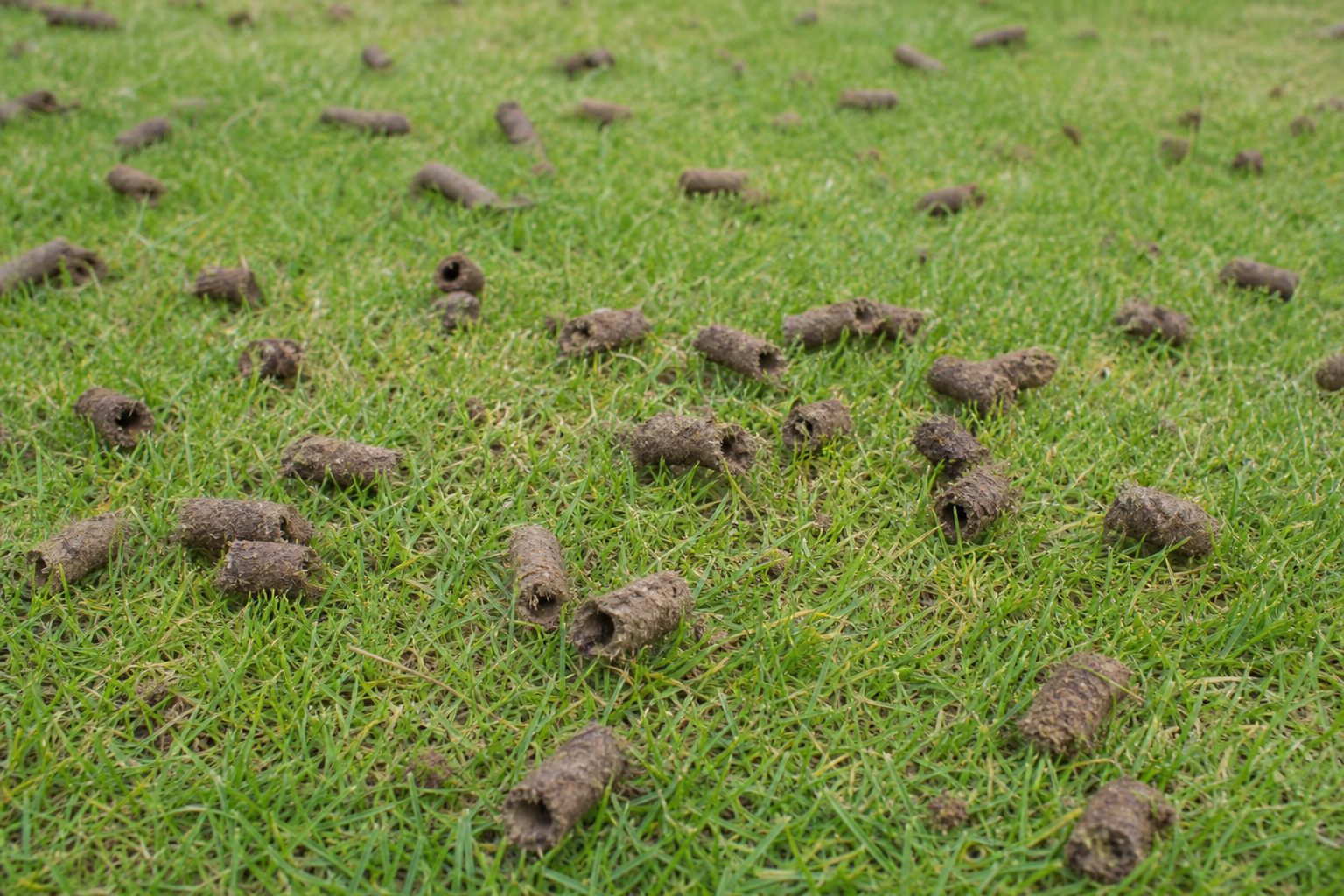
Thousands of soil plugs end up on the surface. There are two legitimate approaches: leave them to break down over two to three weeks and be broken up by mowing, which returns the soil, or collect them and top-dress the holes with sand or a sand and loam mix, which is a genuine drainage improvement on clay. The second costs more because material and labour are added, and a good quote presents both as a choice rather than assuming.
Prices and timing
Aeration runs 80p to £1.80 per square metre, so £120 to £270 on a 150m² lawn, with the higher figures reflecting core collection and top dressing. It pairs naturally with scarification and overseeding in one autumn visit, and doing all three together is cheaper than three separate call-outs.
Timing needs moisture in the soil but not saturation. Early autumn is ideal on Teesside. Baked summer clay is too hard for tines to penetrate cleanly, and waterlogged winter clay tears rather than cores. Booking in September rather than November is the difference between a clean job and a churned one.
How often
Annually on clay lawns with children, dogs or regular use. Every two to three years on lighter, sandier gardens such as those behind Redcar and Marske. If a lawn drains well and a screwdriver pushes in easily to 100mm, it does not need aerating this year, and any contractor worth using will tell you so.
Drainage limits
Aeration improves a lawn that drains slowly. It will not fix a lawn that sits in a hollow collecting the neighbours' run-off, or one built over a buried land drain that has collapsed. Where water stands for more than 24 hours after moderate rain, the honest answer is a drainage assessment, not another year of tining. Say so in your enquiry and the quote you get back will be more useful.